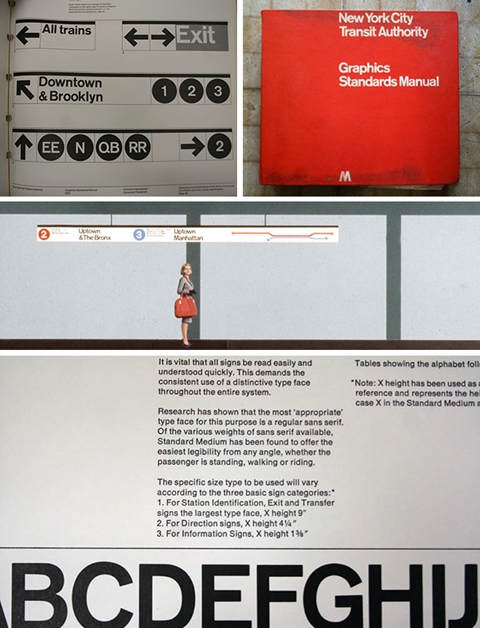
A lot of people who’ve met me — who quickly learn in the course of chit-chat that I’m a type nut and that I’m from New York — will often say something about the use of Helvetica in the New York City subway system, and how much they like it. The thing is, I remember reading years and years ago that Helvetica wasn’t the original spec for the (mostly) Vignelli redesign in the late 60s, but I never got around to digging out any of the details to remind myself what the story was. Thankfully, Paul Shaw has written up a fascinating and thorough article about the history of the subway signage and its evolution over the years, so I can now brush up on the details or refer others to a better source. [Thanks, Norm!]
Local Colo(u)r
Over the summer I moved from my lovely flat in quiet Reading and moved into a little sliver of a neighborhood at the far end of Tooting in South London. Living in London is decidedly more interesting, but I can’t really afford to live in any of the really interesting bits. My little attic flat has its charms, but you might charitably describe it and the rest of the building as a shithole. The neighborhood — down in the outer rim of Zone 3 — itself is pretty dreary.
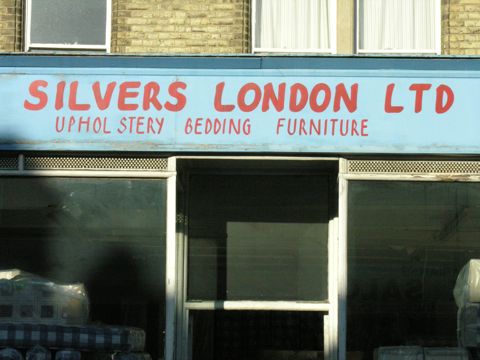
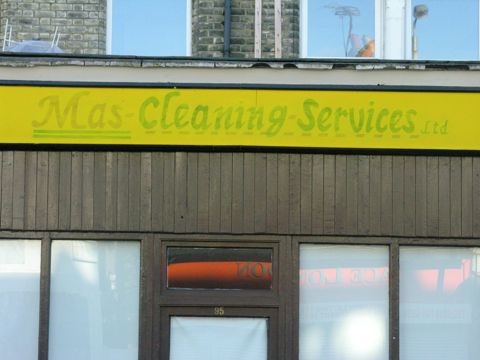
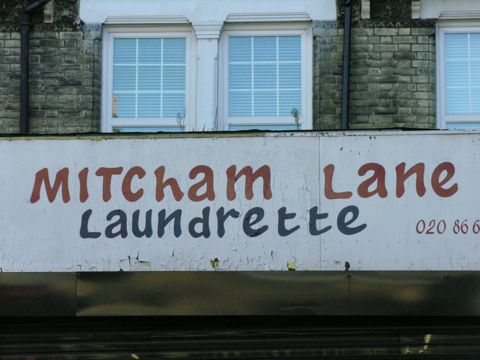
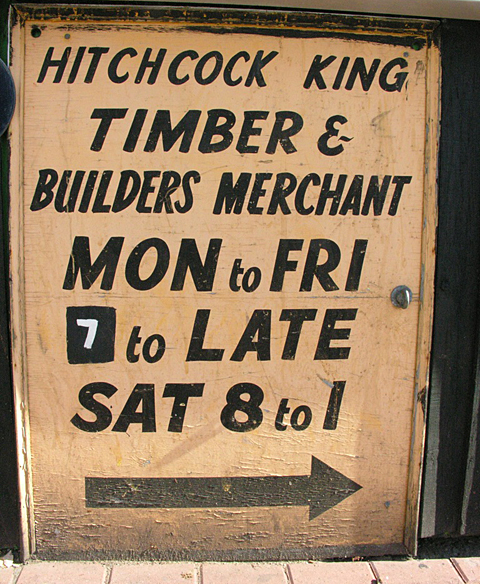
But there’s a perk! There’s a small stretch of the road I’m on that has never succumbed to the usual curse of low-income neighborhoods: cheap, bad, plastic or vinyl signage made with badly spaced, boring fonts. Somehow, the shop fronts on this one little block have either hung in there for long enough, or been out of business long enough, that they’ve still got these awesomely charming, quirky, hand-lettered signs.
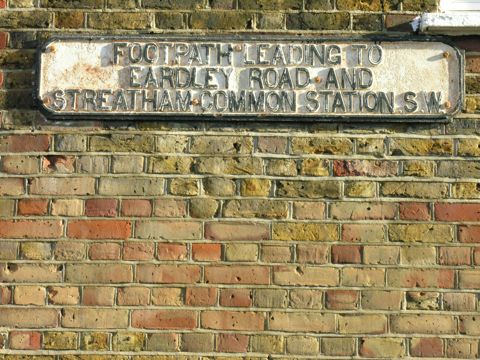
Not lettering, really, but I love these old signs scattered around:

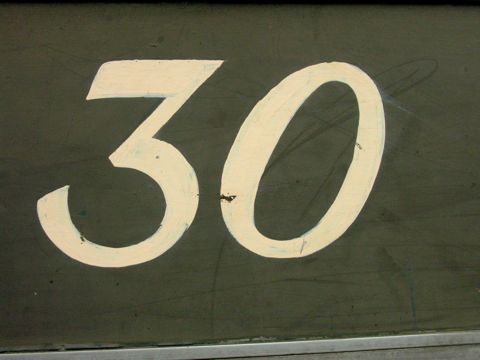
30 Mitcham Lane has as awful Helvetica-filled sign, but managed to hang onto these groovy numbers on their door:

I love the spring in these letters at no. 94:

They couldn’t quite had the past at no. 95:

My personal fave is this unicase approach at no. 97:

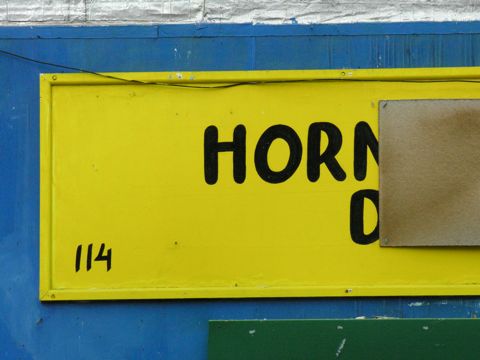
I l wish I could see what they covered up at no. 114:

This is just an old sign on the corner, but I adore it:

Oh yes.
I always thought he was a great casting choice. Check out how good Sylar looks as he struggles with his half-human emotions. Can’t wait.
House in the house
I’m a big fan of House Industries, not just as designers and fellow pop-culture enthusiasts, but also as a bunch of really good-natured, fun, talented guys. It pains me regularly that they release all these zesty, beautifully crafted typefaces that I rarely get a chance to use. Luckily, they also make the best schwag in the business, effectively building something of a lifestyle brand based around their typefaces. This Fast Company article about them is a nice little profile, in case you don’t know much about who they are. (And shame on you if you don’t.)
Candy store
Most of my medical stuff happens at the sexual health clinic rather than a GP’s office, so the vibe in the waiting room is always a little weird. In the town where I used to live, this meant there were lots of nervous college kids, sketchy guys, and kinda trashy girls. There are lots averted eyes and people actively trying to state at the telly instead of anything else.
In the middle of London, however, this means that everyone is almost eerily hot, and mostly gay — including the staff. It’s hard to ignore the distinctly cruisy vibe in the room. Even if folks aren’t actively cruising, they’re definitely inspecting everyone else. It’s a totally different kind of awkward, much more like my doctor’s office back in Chelsea in New York.
Is there a socially acceptable way to ask someone out at the clap clinic?
A font walks into a bar
Believe it or not, corny jokes about typefaces are the kind of thing that are usually too geeky even for me. Nevertheless, I feel like I ought to just post something about this now before every other person in the universe starts sending me links to it, like they did with the font conference video. (I appreciate the thought, by the way. Don’t get me wrong.) So here you go: Typographunnies. [Thanks, Brad.]
Papa, can you hear me?
I’m sick as all get-out this week, with some sort of chesty, fever- thing going on. Hopefully, though, Thursday night‘s audience with the Pope of Trash will be the miracle cure for my ailment.
Judge not lest ye be judged
This is a snippet from a fascinating little documentary called Dressing for Pleasure by John Sampson. (Unfortunately the site that used to host the whole thing has shut down, and this is all I can find at the moment.) I totally lack the energy to combine this barrage of related links into a proper post right now, so just think of this as sort of a pervy brain dump:
These go to 11
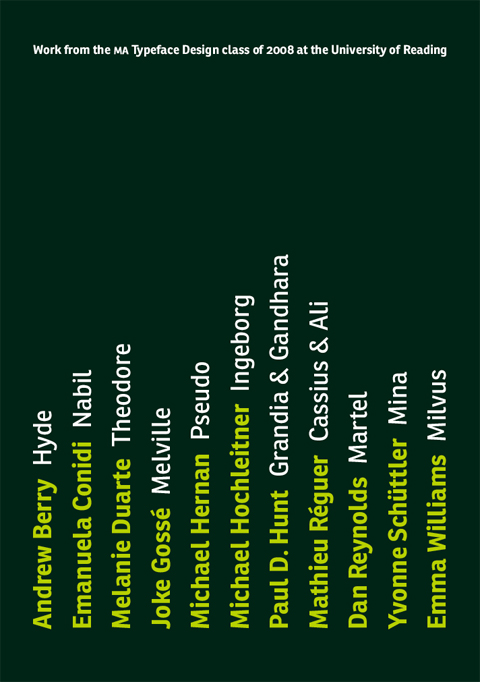
Rejoice! The MA Type Design program at Reading has just unleashed a new batch of gorgeous, freshly minted typefaces! Behold!
I’ve had a real blast getting to know these guys during the past year, but since I wasn’t actually there in the studio with them all year I only had the barest notion of where everyone was going with their designs, and then I had already moved to London by the time everyone began the final frenzy of completing their fonts. It’s so exciting to see what great types they finally produced. Congratulations, gang!
Typography for Lawyers
Once you start thinking about typography, you begin to realize that it affects everyone to some degree or another: it’s not just the preoccupation of the font nerds in your life. (Just ask any of the many people I’ve turned to the Dark Side over the years. Once you start thinking about kerning there’s no return.) Typography is an integral part of communicating, and people often need to communicate. It’s nice, then, when people who get it take the time to explain its relevance in their own field. Case in point: Typography for Lawyers, written by lawyer and former type designer Matthew Butterick.
The few comments on the site so far are hilariously detail-oriented and pedantic, which you might expect from a project aimed at lawyers and typographers.